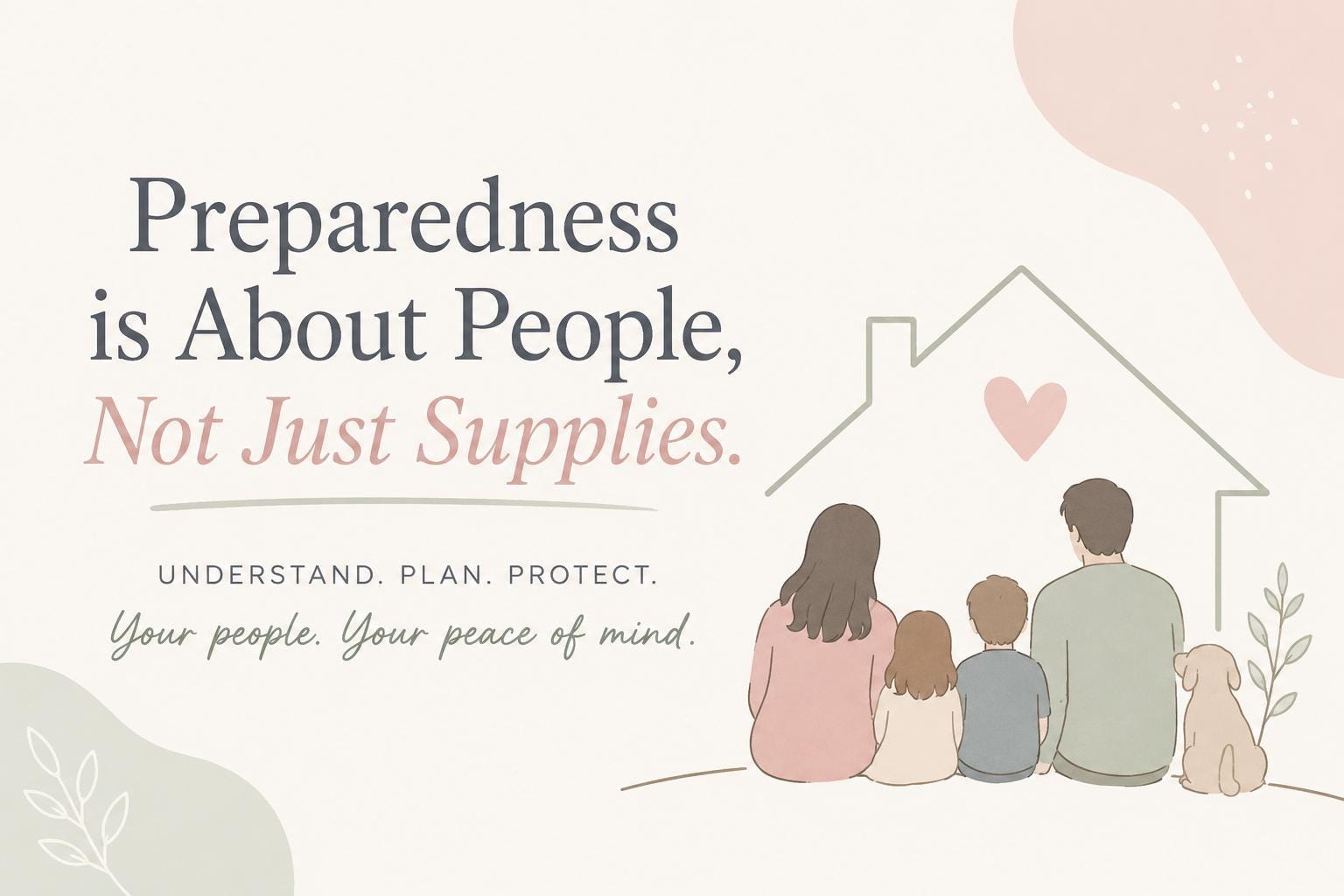
When most people think about emergency preparedness, they think about supplies. Water. Food. Flashlights. Batteries.Those things matter, but after creating emergency preparedness systems for families, I have learned that preparedness is really about people.One thing that has surprised me is how different every family is. Some have young children. Some have pets. Some have neurodivergent family members. Some have medical needs. Some care for elderly relatives. What works well for one family may not work well for another.As someone who studies psychology, this has reinforced something I keep seeing over and over again: every person has a story you know nothing about. Two families can face the same emergency and experience it completely differently because their needs, challenges, experiences, and priorities are different.That is why I believe preparedness should offer both structure and flexibility.Many families benefit tremendously from well designed preparedness systems that provide guidance, organization, and practical planning tools. A good preparedness planner helps families think through important decisions before they are under pressure. It helps organize critical information, identify gaps, and create a clearer path forward during stressful situations.At the same time, some families have unique circumstances that may benefit from additional customization. A family with a child who has sensory sensitivities may need different planning considerations than another household. A family with multiple pets may have evacuation concerns that others do not. A family managing medical needs may require additional planning and documentation.The goal is not to create a perfect plan. The goal is to create a plan that works.One thing I have learned through both psychology and preparedness planning is that people often underestimate how much stress affects decision making. During an emergency, even simple choices can feel overwhelming. That is why having systems in place ahead of time matters. When people know where important information is located, what steps to take, and what resources they have available, they are often able to respond more calmly and effectively.Preparedness does not have to be complicated to be effective. In fact, a simple system that is easy to follow is often more useful than a complex plan that never gets used. The best preparedness systems are the ones families can understand, maintain, and rely on when they need them most.Whether I am creating a custom preparedness system or a non custom planner, my goal is always the same: help families reduce confusion, improve organization, and feel more confident before an emergency happens.Because preparedness is not really about supplies.It is not even really about disasters.It is about people.It is about protecting the people we love, understanding that every family is different, and creating systems that help them navigate difficult situations with greater clarity, confidence, and peace of mind.
Preparedness Is About People, Not Just Supplies