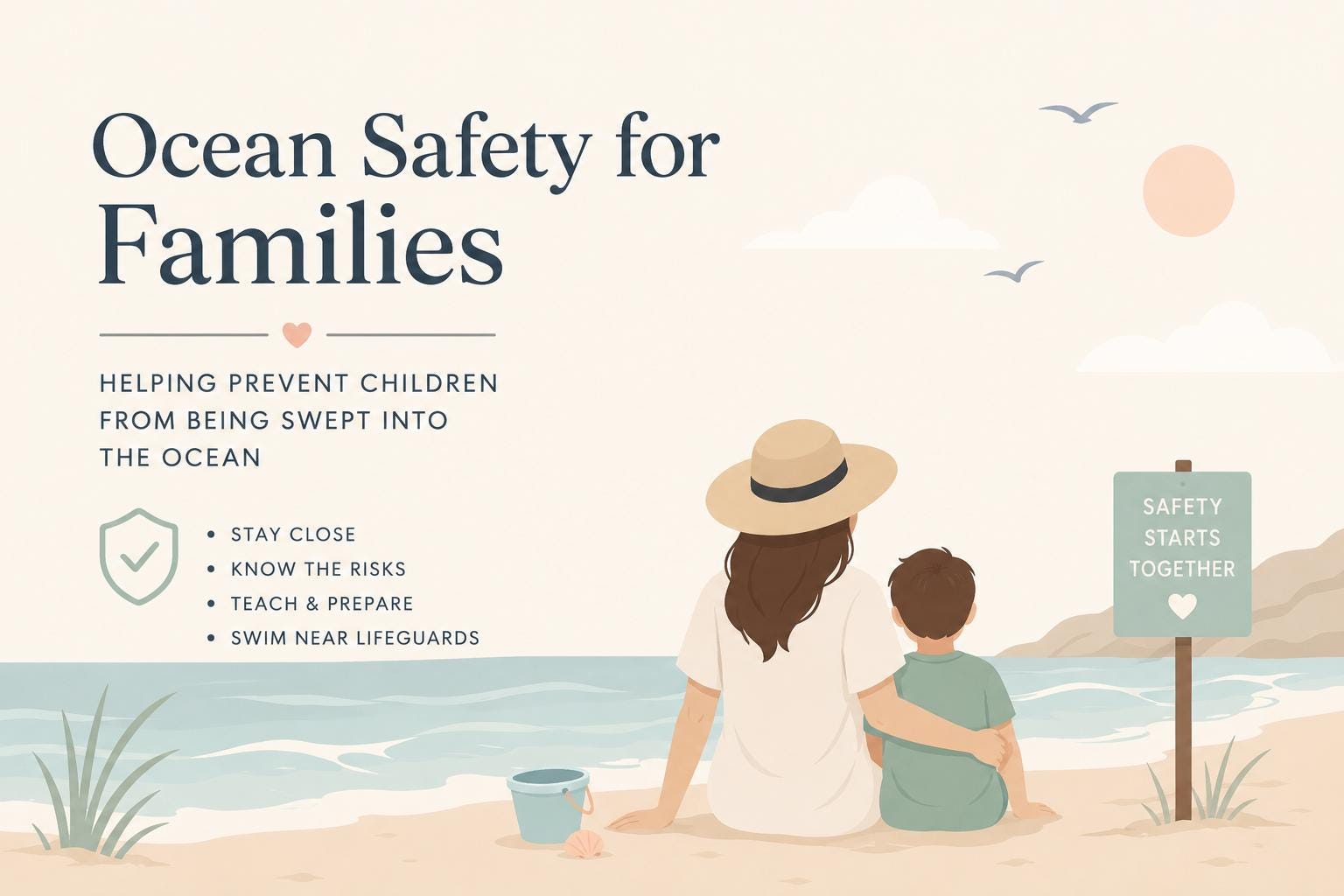
A trip to the beach can be one of the most enjoyable experiences for families, but it is important to remember that the ocean can change quickly and unpredictably. Many parents assume that dangerous situations only occur during storms or rough surf, yet children can be swept into deeper water even on calm, sunny days. One of the most effective ways to reduce risk is maintaining close supervision. Young children should remain within arm's reach near the water because waves can knock them off balance in seconds. The ocean is also very different from a swimming pool. Strong currents, changing tides, uneven footing, and powerful waves can create hazards that many children do not fully understand.Parents can further improve safety by learning about rip currents, which are one of the leading causes of ocean rescues. Rip currents are powerful channels of water that move away from shore and can quickly carry swimmers farther out to sea. Teaching older children basic ocean safety skills and ensuring they understand the importance of staying where adults can see them can make a significant difference. It is also important not to rely on inflatable toys or floatation devices as safety equipment. Wind and currents can carry these items away from shore much faster than many people realize.Whenever possible, families should choose beaches with trained lifeguards and swim near lifeguard stations. Lifeguards provide an important layer of protection and are often the first to recognize changing ocean conditions before beachgoers notice them. Before entering the water, families can benefit from discussing simple expectations, such as where children are allowed to play, what to do if they become separated, and who they should approach if they need help.The goal of ocean safety is not to create fear but to build awareness. The ocean is one of nature's most beautiful environments, but it is also one of its most powerful. A few minutes of preparation, supervision, and planning can help families enjoy the beach with greater confidence while reducing the risk of a preventable tragedy.
Ocean Safety for Families: Helping Prevent Children from Being Swept Into the Ocean