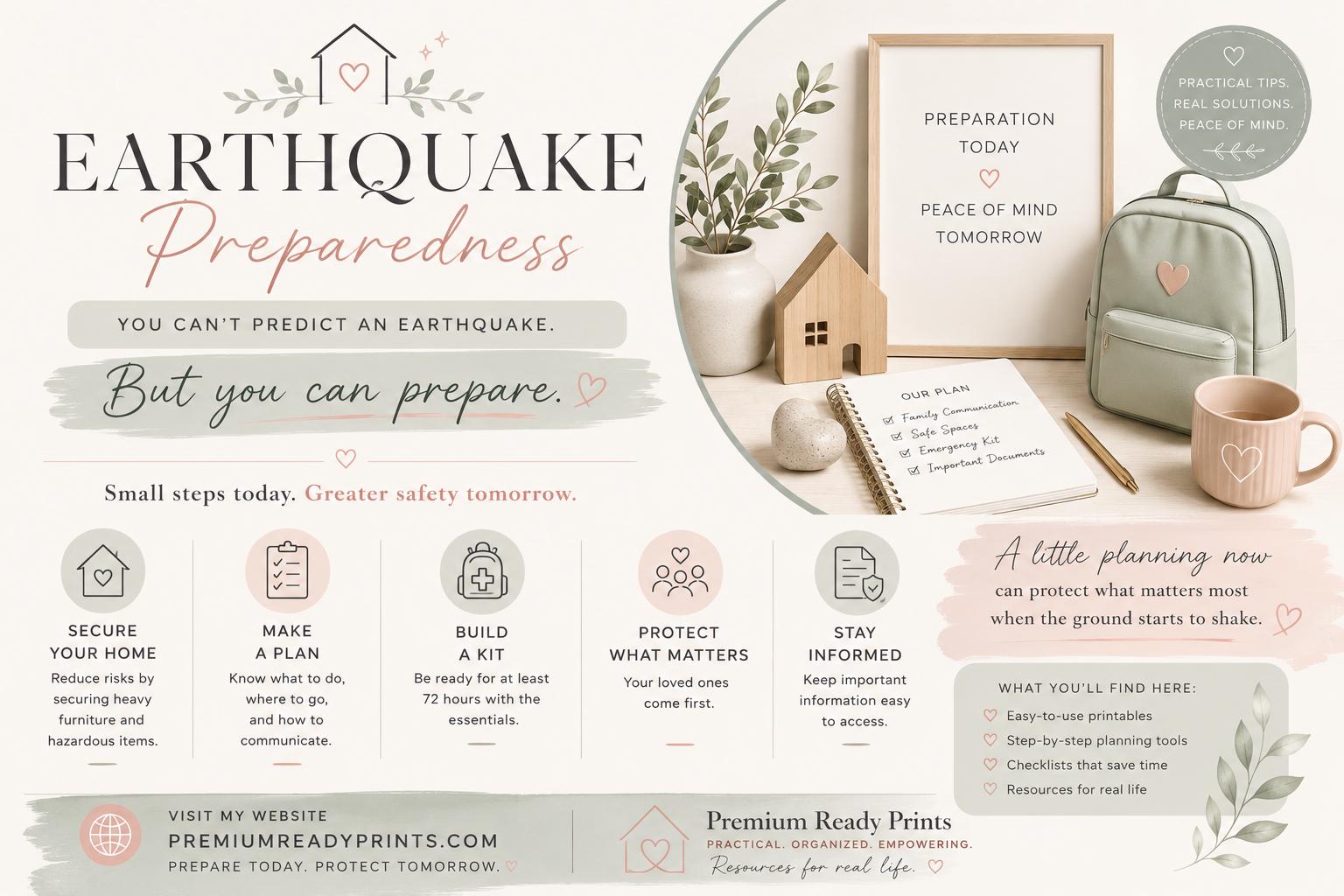
Earthquakes happen without warning, which means your preparation before one occurs is often what matters most. The goal isn't to predict the next earthquake. It's to make sure you already know what to do when every second counts.One of the biggest mistakes people make is focusing only on emergency supplies. Supplies are important, but knowing where to take cover, having a family communication plan, securing heavy furniture, and keeping important information organized can have an even greater impact. Preparation isn't just about what you own. It's about how quickly you can respond.One piece of advice I always give is to prepare for the first 72 hours after an earthquake. You may be without electricity, running water, internet, or easy access to stores. Keep enough water, food, medications, flashlights, batteries, and phone chargers to help your household remain self-sufficient while emergency services focus on the hardest-hit areas.Another lesson I've learned is that the earthquake isn't always the biggest danger. Aftershocks, damaged buildings, gas leaks, broken water lines, and blocked roads can create challenges long after the shaking stops. Resist the urge to rush back into damaged buildings. Take a moment to check your surroundings, watch for hazards, and make thoughtful decisions before taking action.I also believe organization is one of the most overlooked parts of preparedness. Keep emergency contacts, medications, important documents, insurance information, and spare keys together in one easy-to-access place. During a stressful situation, being organized can save valuable time and reduce panic.Something else I encourage people to do is practice their plan. Walk through your home and ask yourself, "Where would I take cover in each room?" Make sure everyone in your household knows the answer. Practice may seem simple, but familiarity helps replace panic with confidence.That's one of the reasons I create preparedness resources. I believe emergency planning should be practical, personalized, and easy to use. Small systems and simple plans help families feel more confident because they already know what to do before an emergency happens.To me, preparedness isn't about living in fear. It's about protecting what matters most. Every small step you take today, whether it's securing a bookshelf, organizing important information, or practicing your family plan, makes tomorrow a little safer and a lot less overwhelming.
Earthquake Preparedness: Small Steps That Make a Big Difference