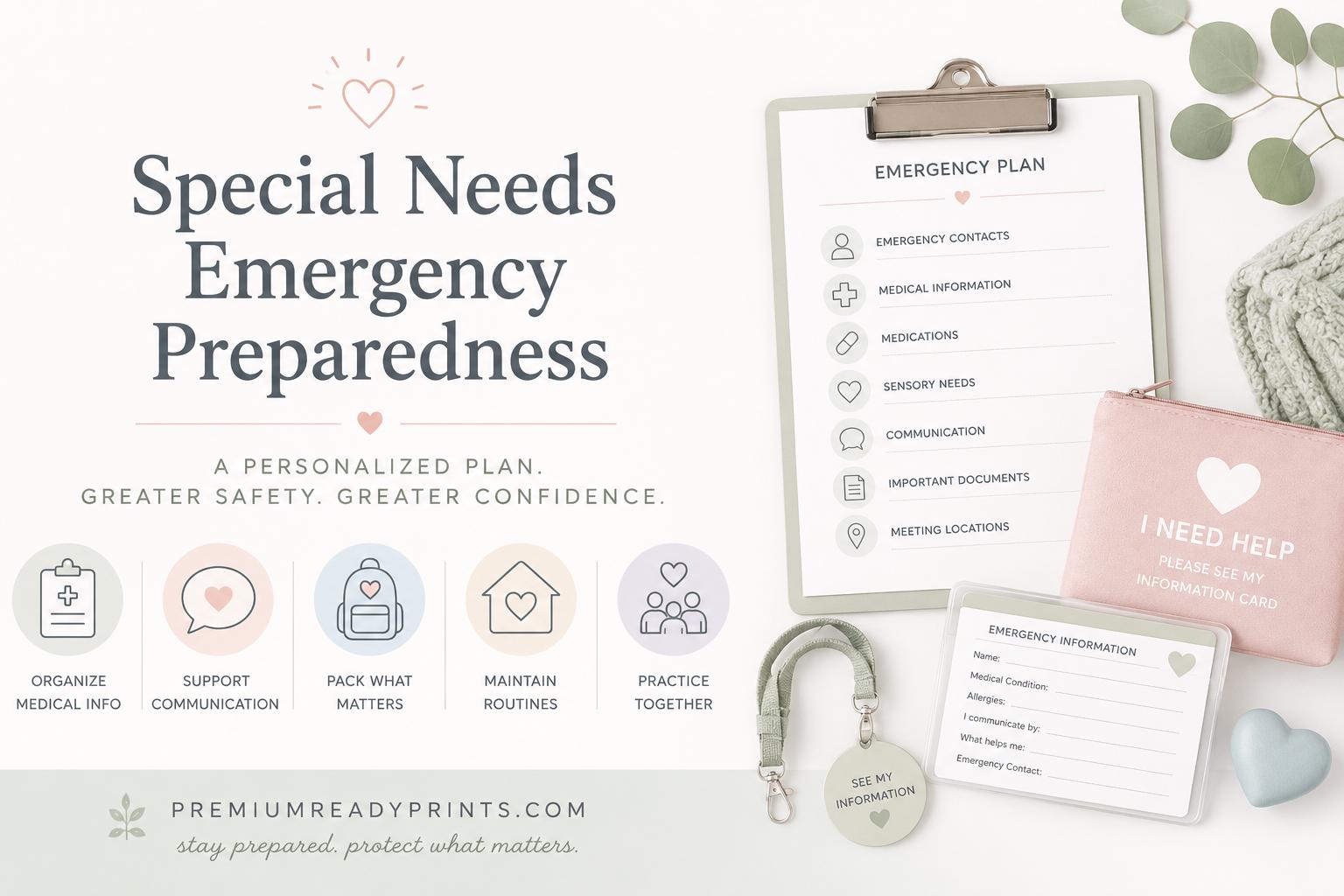
Emergency preparedness is never one-size-fits-all, especially for individuals with special needs. Every person has unique medical needs, communication styles, sensory preferences, routines, and support requirements. A personalized plan is one of the most valuable ways to improve safety and reduce stress during an emergency.Start by organizing the information you'll need most. Keep emergency contacts, medications, allergies, medical history, insurance information, and important documents together in one easy-to-access location. During a crisis, having everything organized can save time and help caregivers and first responders provide better support.Think beyond emergency supplies. Familiar routines often provide comfort during stressful situations. Pack sensory tools, communication devices, comfort items, favorite snacks, chargers, and any medical equipment the individual relies on every day. These familiar items can help reduce anxiety when everything else feels uncertain.Practice your plan before you need it. Walk through evacuation routes, review meeting locations, and make sure everyone knows their role. Practicing builds confidence and reduces panic because people are responding to something familiar instead of something completely new.One of the most overlooked parts of preparedness is communication. If the individual has difficulty speaking or communicating under stress, carry a simple emergency information sheet that explains medical needs, communication preferences, sensory sensitivities, and what helps them feel safe. That information can be invaluable to caregivers and first responders.Preparedness isn't about expecting the worst. It's about reducing uncertainty. When information is organized, supplies are easy to find, and everyone knows the plan, families can spend less time reacting and more time focusing on the person who needs them most.The best emergency plan isn't the biggest one. It's the one that's personalized, practical, and easy to use when it matters most.
Special Needs Emergency Preparedness: Small Steps That Make a Big Difference