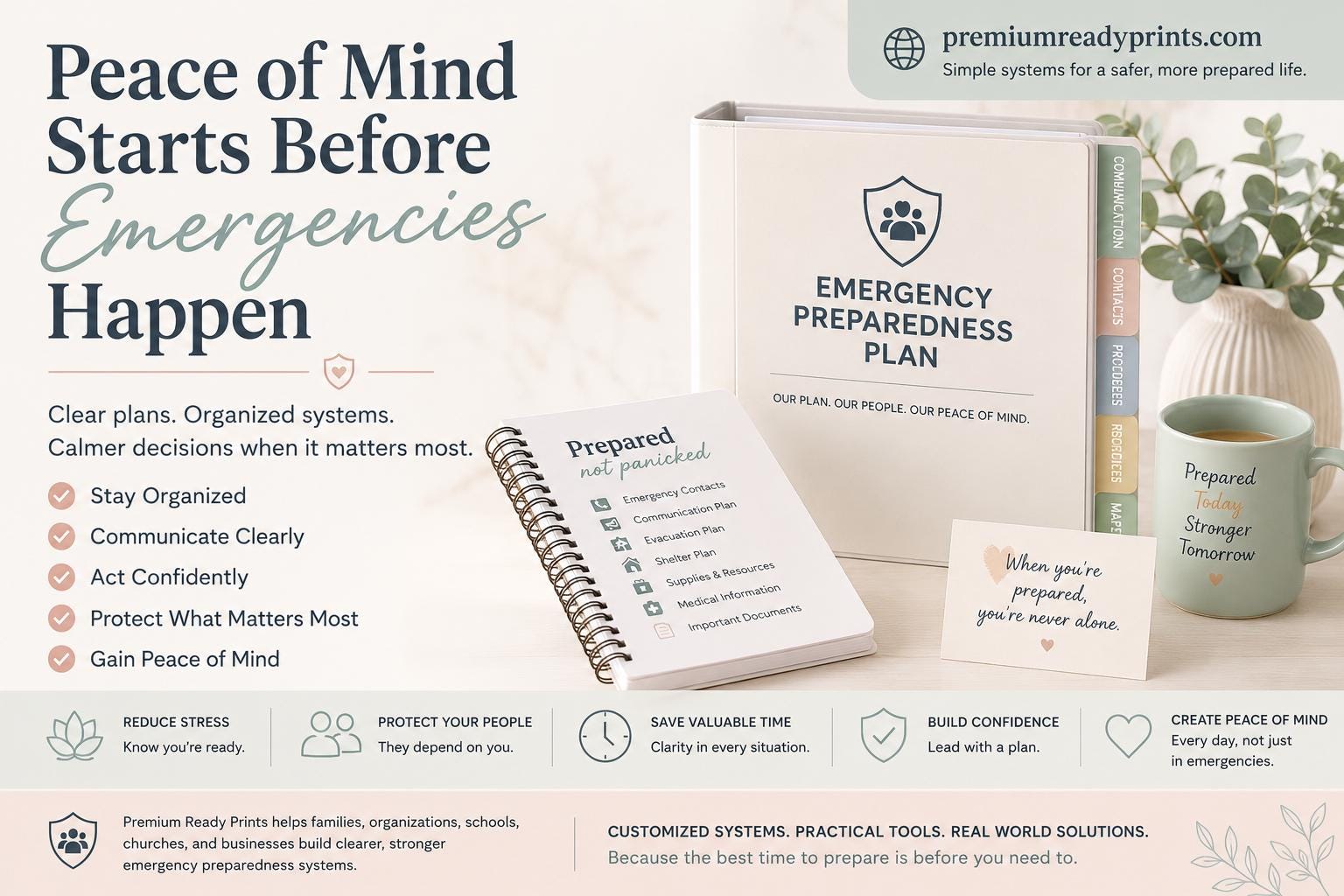
Most people do not think about emergency preparedness until something stressful happens. A wildfire gets closer. A storm warning appears. A workplace emergency creates confusion. Communication breaks down. People panic because nobody knows what to do next.What many families and organizations are truly looking for is not just an emergency plan. They are looking for peace of mind. They want to know there is already a system in place before high stress situations happen.Preparation has a way of reducing uncertainty. When responsibilities are organized, important information is easier to access, communication becomes clearer, and decisions can be made faster under pressure. Even simple preparedness systems can make situations feel less overwhelming.One of the biggest misconceptions about preparedness is that it has to feel extreme or fear based. In reality, preparedness is often about creating calmer systems for everyday life. It is about knowing where important information is, having communication plans already organized, understanding responsibilities, and reducing unnecessary confusion during stressful moments.Families, schools, churches, businesses, and organizations all operate differently. That is why personalized preparedness systems can be so valuable. Generic templates do not always reflect the unique concerns, communication needs, or operational structure of each environment.Preparedness is not about expecting the worst. It is about creating more stability, confidence, and clarity for the people who depend on you.Because peace of mind often starts long before emergencies begin.
Peace Of Mind Starts Before Emergencies Happen