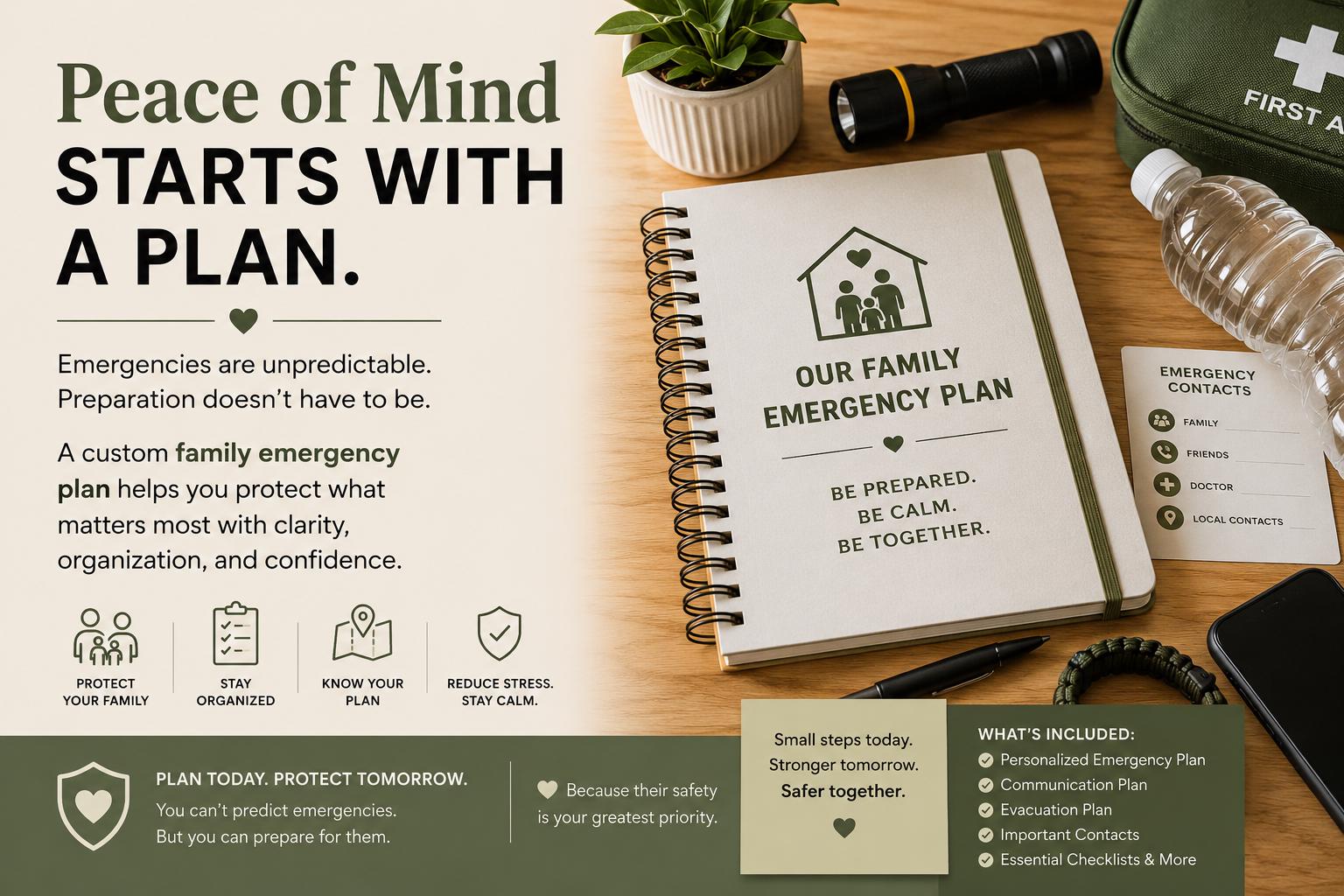
Most families think they will figure things out during an emergency, but stressful situations become overwhelming much faster than people expect. Power outages, evacuations, severe weather, wildfires, and communication problems can quickly create confusion when there is no plan already in place.One thing many people underestimate is how emotional emergencies become. Children become overwhelmed, pets become stressed, and adults often panic once routines suddenly stop working. That is why preparedness is not just about supplies. It is also about creating calmer systems that help families stay more organized during difficult situations.A family emergency preparedness plan helps organize important information like emergency contacts, evacuation ideas, medications, communication plans, and household priorities in one place. Even simple preparation can reduce chaos significantly when unexpected situations happen.Preparedness also looks different for every household. Families with children, pets, elderly relatives, medical concerns, or autism and sensory support needs often require more personalized planning instead of generic checklists.One of the biggest lessons preparedness teaches is that organization matters more than perfection. Families do not need to live in fear to become more prepared. Small steps today can create more clarity, confidence, and peace of mind later.
What Most Families Realize Too Late During Emergencies